


No products in the cart.
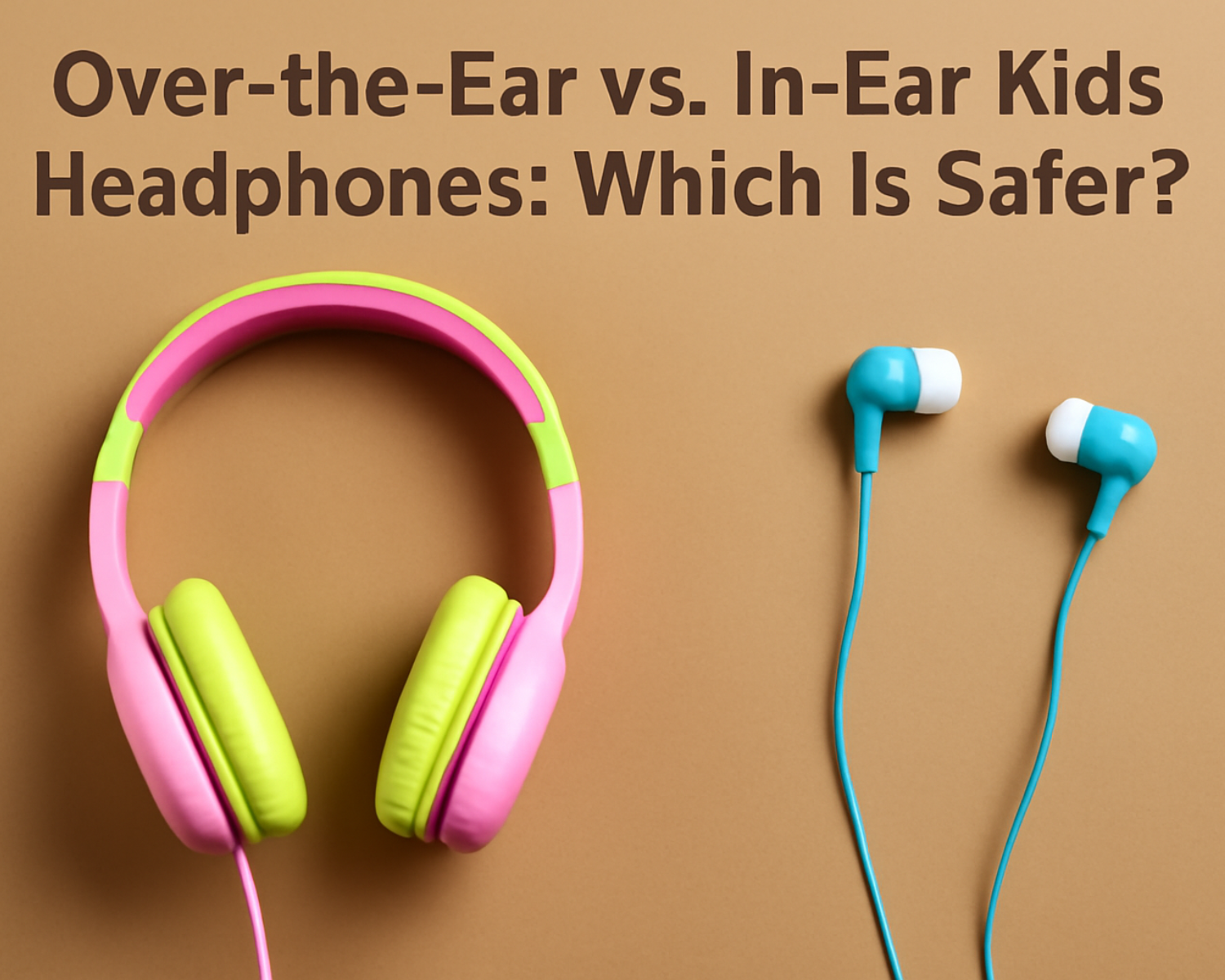
Over-the-Ear vs. In-Ear Kids Headphones: Which Is Safer?
Introduction
When choosing headphones for children, safety is a top priority for parents. With the increasing use of devices for entertainment, learning, and gaming, finding the right pair of headphones is essential to protect your child’s hearing and ensure a comfortable listening experience. One of the biggest decisions parents face is whether to choose over-the-ear or in-ear headphones. Each style has pros and cons, but safety is crucial. Let’s explore which type is safer for your child and why.
Over-the-Ear Headphones: A Safer Choice?
As the name suggests, over-the-ear headphones cover the entire ear with large, cushioned ear cups. These headphones are generally considered a safer option for children for several reasons:
Better Sound Isolation: Over-the-ear headphones isolate natural noise, blocking external sounds more effectively. This reduces the need for your child to turn up the volume too high to hear their content, ultimately protecting their hearing.
More Comfortable Fit: Since over-the-ear headphones do not sit inside the ear canal, they are typically more comfortable for extended use. The soft, padded ear cups distribute pressure evenly around the ear, reducing discomfort.
Volume Control: Many over-the-ear headphones come with built-in volume-limiting technology that caps the maximum volume at 85 decibels, the recommended safe listening level for children. This feature helps prevent long-term hearing damage caused by loud music or sounds.
Less Risk of Ear Infections: Because over-the-ear headphones don’t sit inside the ear canal, they are less likely to cause irritation or discomfort, reducing the risk of ear infections that can sometimes occur with in-ear models.
In-Ear Headphones: The Risks
In-ear headphones, or earbuds, sit directly inside the ear canal. While they are more portable and often more affordable, they come with a few safety concerns:
Higher Risk of Hearing Damage: Since in-ear headphones sit closer to the eardrum, there’s a higher chance that the sound may be too loud, even at lower volume levels. Without volume-limiting features, in-ear headphones can easily push sound directly into the ear canal, increasing the risk of hearing damage over time.
Comfort and Fit Issues: Some children may find in-ear headphones uncomfortable or struggle to keep them securely in place, leading to frequent adjustments and distractions.
Potential for Ear Infections: In-ear headphones can increase the risk of ear infections, especially if not cleaned regularly. Inserting and removing earbuds can push dirt and bacteria into the ear canal, causing irritation and infections.
Which Is Safer?
When considering safety, over-the-ear headphones are generally the better choice for kids. They provide better sound isolation, are more comfortable for extended use, and pose fewer risks for hearing damage and ear infections. Over-the-ear models are often designed with volume-limiting technology to ensure the sound level stays within safe limits.
While in-ear headphones can be convenient and may work for older children or teens, they are not as safe for younger children due to the potential risks of hearing damage and ear infections. If you opt for in-ear headphones, choose a model with volume control and consider using them in short bursts to minimize risks.
Conclusion
Over-the-ear headphones are the safer and more comfortable choice for younger children, offering better protection against hearing loss and ear infections. While in-ear headphones may be more convenient for older kids, the added risks make them a less ideal option for younger ears. No matter the style, always prioritize headphones with volume-limiting features to ensure your child’s hearing remains protected while they enjoy their favorite media.
#KidsHeadphones #SafeListening #OverTheEarHeadphones #InEarHeadphones #Parenting #HearingProtection #ChildSafety