


No products in the cart.
Lost One Earbud? What to Do Before You Replace the Whole Pair
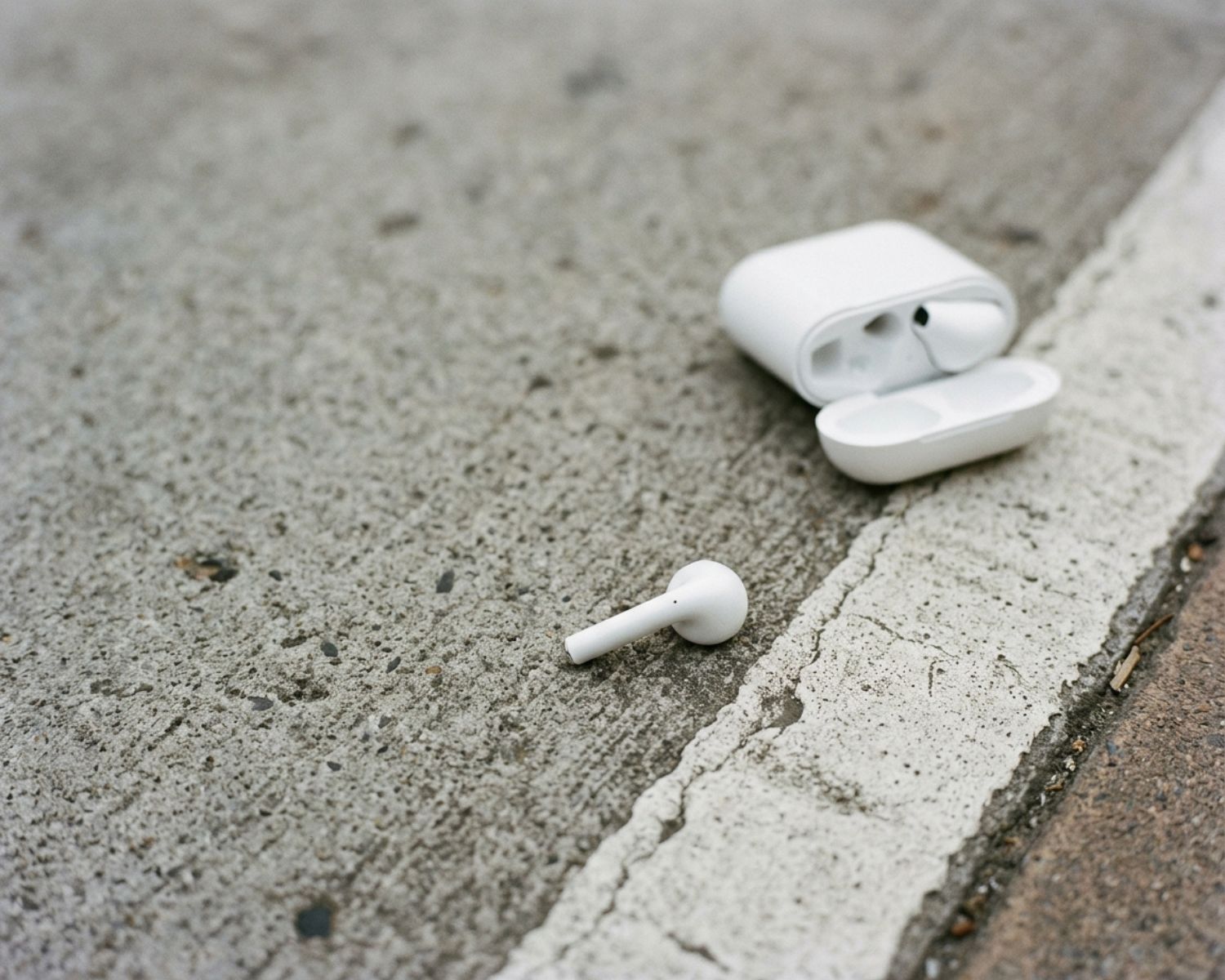
There is a very particular flavor of despair reserved for the moment you realize there is only one earbud in the case.
You retrace your steps. You pat down every pocket twice, including the ones you know are empty. You get down on the floor of a bus that has seen things, sweeping your hand under a seat while a stranger watches with mild concern.
And eventually you accept the truth, which is that a small piece of technology worth more than your lunch is now living its own life somewhere in the city.
Then comes the expensive part, which is the assumption that a pair minus one equals zero, and that the only path forward is buying a whole new set. That assumption is wrong more often than people think, and it is worth ten minutes of your time before you spend the money.
First, Confirm It Is Actually Gone
Before you mourn, use the tools you probably forgot you have.
Most modern earbuds appear inside your phone’s device-finding app, and while the tracking is rarely precise enough to point at a specific sofa cushion, it will usually tell you the last place the bud connected. That alone narrows a citywide search to a single room, or reveals that it dropped out of your ear on a street two stops back.
Some earbuds can also play a locator sound, provided the bud still has charge and is not sitting inside a closed bag muffling itself into silence. Try it early, since an orphaned bud burns through its remaining battery hunting for a connection it will never find, and once it dies, so does your best chance of hearing it chirp back at you.
Second, Find Out Whether One Bud Is Enough
Here is the part most people never test. A lot of earbuds work perfectly well on their own.
Many models support a true mono mode, where the remaining bud collapses both channels into one and carries on as though nothing happened.
This is genuinely useful for calls, podcasts, and audiobooks, where stereo separation contributes almost nothing anyway. Music suffers more, since you lose the stereo image entirely, but a mono bud is still infinitely better than a drawer full of silence.
The catch is that implementations differ wildly. Some earbuds happily run either side solo, while others insist on a designated primary bud and will refuse to cooperate if that is the one you lost. Test it before assuming the worst, because the answer determines everything that follows.
Third, Ask Whether You Can Just Buy the Missing One
This is the step almost nobody attempts, and it is the one that most often saves the day.
Several manufacturers sell individual replacement buds and replacement cases through their support channels, sometimes quietly, sometimes only if you ask directly. Others will tell you flatly that components are not sold separately.
The policy varies by brand and even by model, so the only reliable move is to contact support with your exact model number and ask the plain question, which is whether a single left or right bud can be purchased.
If your model is still current, your odds are decent. If it was discontinued three years ago, prepare for disappointment, since spare inventory tends to evaporate the moment a product leaves the catalog.
Fourth, Understand the Pairing Ritual
Getting a replacement bud is only half the job, because a new bud does not automatically know it belongs to your old one.
Most brands require a specific reset and re-pairing sequence, typically involving placing both buds in the case, holding a button for an uncomfortably long time, and waiting for a light to blink in a particular color. Manufacturers publish these steps, and they are model-specific enough that guessing will simply waste your afternoon.
Be aware that firmware mismatches can complicate things too. A replacement bud shipped from newer stock may be running different firmware than your surviving one, which occasionally causes odd behavior until both are updated to the same version.
When Replacement Genuinely Is the Answer
Sometimes the math just does not work, and it is worth recognizing that moment rather than fighting it.
If a single replacement bud costs sixty percent of a new pair, if your set is several years old and the battery was already fading, or if the manufacturer has stopped supporting the model entirely, then you are pouring money into a product that is on its way out regardless.
At that point a fresh set from a proper retailer like Earbuds4Life is the more sensible purchase, and you get a warranty and a full battery instead of a compromise.
Keep the surviving bud anyway. Orphaned buds have a small but real resale market, and someone out there lost exactly the opposite side of your pair.
The Habit That Prevents All of This
Almost every lost earbud disappears during a transfer, meaning the moment it leaves your ear and has not yet reached the case.
So close the case immediately, every single time. Take buds out while seated rather than while walking. And if your earbuds ship with multiple ear tip sizes, use the ones that actually seal, since a bud that grips properly is a bud that does not quietly evacuate your ear on a windy platform.
#Earbuds #WirelessEarbuds #TechTips #LostEarbud #AudioAdvice #EarbudCare #TrueWireless #Earbuds4Life