


No products in the cart.
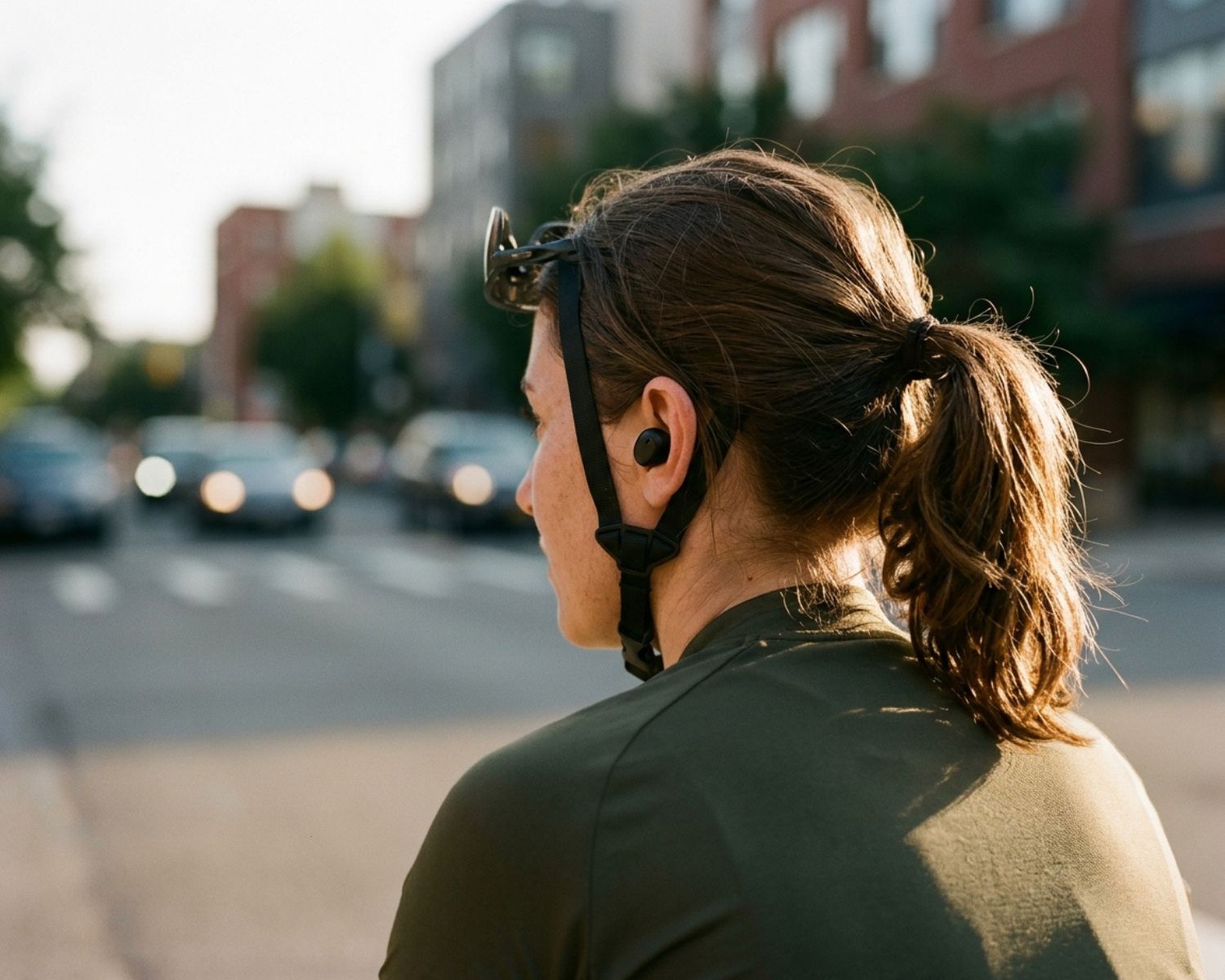
The Earbud Rule Nobody Reads: Where Wearing Both Buds Is Actually Against the Law
Most of us assume the rules about headphones boil down to volume and vibes. Do not deafen yourself, do not blast music on a quiet train, and generally do not be the person whose tinny bass line is audible three seats away.
What almost nobody realizes is that in a fair number of places, the rule has nothing to do with how loud your music is. It is about how many ears you have plugged.
Wearing headphones in both ears while driving is prohibited in several US states and in a number of countries, and the rules for cyclists form an even messier patchwork, with some places banning both ears, some banning any earphone at all, and some staying completely silent on the matter.
Which means a very large number of perfectly law-abiding people commit a small infraction every single morning without the faintest idea they are doing it.
Why the Law Cares About Ears, Not Decibels
The logic is easier to follow once you stop thinking about noise and start thinking about awareness.
Regulators are not worried about your eardrums when you are behind the wheel. They are worried about whether you can hear a siren approaching, a horn behind you, or the specific crunching sound that means something has gone wrong with your vehicle.
Volume limits are difficult to enforce at the roadside, since an officer cannot measure what is playing inside your head. Counting ears, on the other hand, takes about half a second.
That is why so many rules are written as one-ear rules rather than volume rules. It is a blunt instrument, but it is an enforceable one.
The Rules Change When You Cross a Line on a Map
This is where it becomes genuinely tricky, because the rules are local and they do not announce themselves.
Drive between two neighboring states and the law may flip. Cycle across a national border in Europe and you can move from total permissibility to a fineable offense in the space of a few pedal strokes.
Delivery riders and long-distance cyclists are the most exposed, since they cover the most ground and are the most likely to be listening to something for hours at a stretch.
Enforcement varies just as much. In some places the rule is essentially theoretical until an accident happens, at which point it becomes very real indeed and starts affecting questions of liability and insurance. That is the scenario worth planning around, since the fine is rarely the expensive part.
What This Means for the Earbuds You Actually Buy
Here is the practical turn, and it is the part no legal guide will tell you, because legal guides do not know anything about hardware.
If you live somewhere with a one-ear rule, then the single most important feature in your next pair is proper mono support. Some earbuds run happily on either side alone, collapsing both channels into the one bud you are wearing.
Others designate a primary bud and become unhelpful if that is not the one in your ear. If you plan to wear one bud for hours a day, that distinction matters far more than an extra millimeter of driver size.
Battery behavior matters too, since wearing one bud at a time while the other charges effectively doubles your listening window, which is a genuine advantage for anyone commuting long distances.
Then there is the design question. Bone conduction and open-ear models sit outside the ear canal entirely and leave your hearing largely unobstructed, which is precisely why they have become popular with cyclists and runners.
Whether they satisfy a particular local rule depends on how that rule is worded, since some laws target the ear canal and others target the device, so it is worth reading your own jurisdiction’s wording rather than assuming.
Browsing categories by design rather than by brand, which retailers like Earbuds4Life make easy, is a faster route to the right shape of product than searching by model name.
Transparency Mode Is Not a Legal Defense
Worth saying plainly, because it is a common and understandable mistake.
Transparency mode, ambient mode, and their various cousins pipe outside sound into your ears through the microphones, and they are excellent for situational awareness. Used well, they genuinely make you safer on the street.
They do not, however, change the fact that you have two buds in your ears. A law that counts ears counts ears. Transparency mode is a safety feature, not a permission slip, and treating it as one is how people end up explaining themselves at the roadside.
The Sensible Approach
Look up your own local rule once, since it takes five minutes and the wording is usually short. Pay particular attention to whether it covers driving only or extends to cycling, and whether it prohibits both ears or any ear at all.
Then build the habit that fits it. If you are in one-ear territory, get comfortable riding and driving with a single bud, keep the other charging, and choose hardware that supports that pattern without complaint.
You lose a bit of stereo. You keep your license, your insurance position, and your ability to hear the ambulance. On balance, a reasonable trade.
#Earbuds #RoadSafety #CyclingTips #DrivingLaws #TransparencyMode #BoneConduction #CommuterTech #Earbuds4Life