


No products in the cart.
Why Do Headphones Sound Better at Night?
Have you ever played a familiar song through your headphones late at night and noticed details you swear were not there before? The bass seems deeper, the vocals feel closer, and quiet instruments suddenly have room to breathe.
Your headphones have not secretly improved after sunset. What has changed is everything around them.
Lower background noise, fewer distractions, and a more relaxed state of mind can influence how you experience sound. Night-time listening may reveal what your headphones were producing all along.
The World Around You Is Quieter
During the day, your ears are constantly dealing with competing sounds. Traffic, conversations, household appliances, air conditioning, and movement outside can all mask parts of your music.
Low-level background noise may be especially good at covering quieter details. Soft vocals, delicate percussion, and subtle bass textures can become harder to notice, even when you are wearing headphones.
At night, many of those sounds disappear. The lower noise floor allows more of the recording to reach your attention, making the same headphones appear clearer and more detailed.
You Are Paying Closer Attention
Daytime listening often happens alongside another activity. You may be working, exercising, travelling, or checking your phone. The music is playing, but it does not have your full attention.
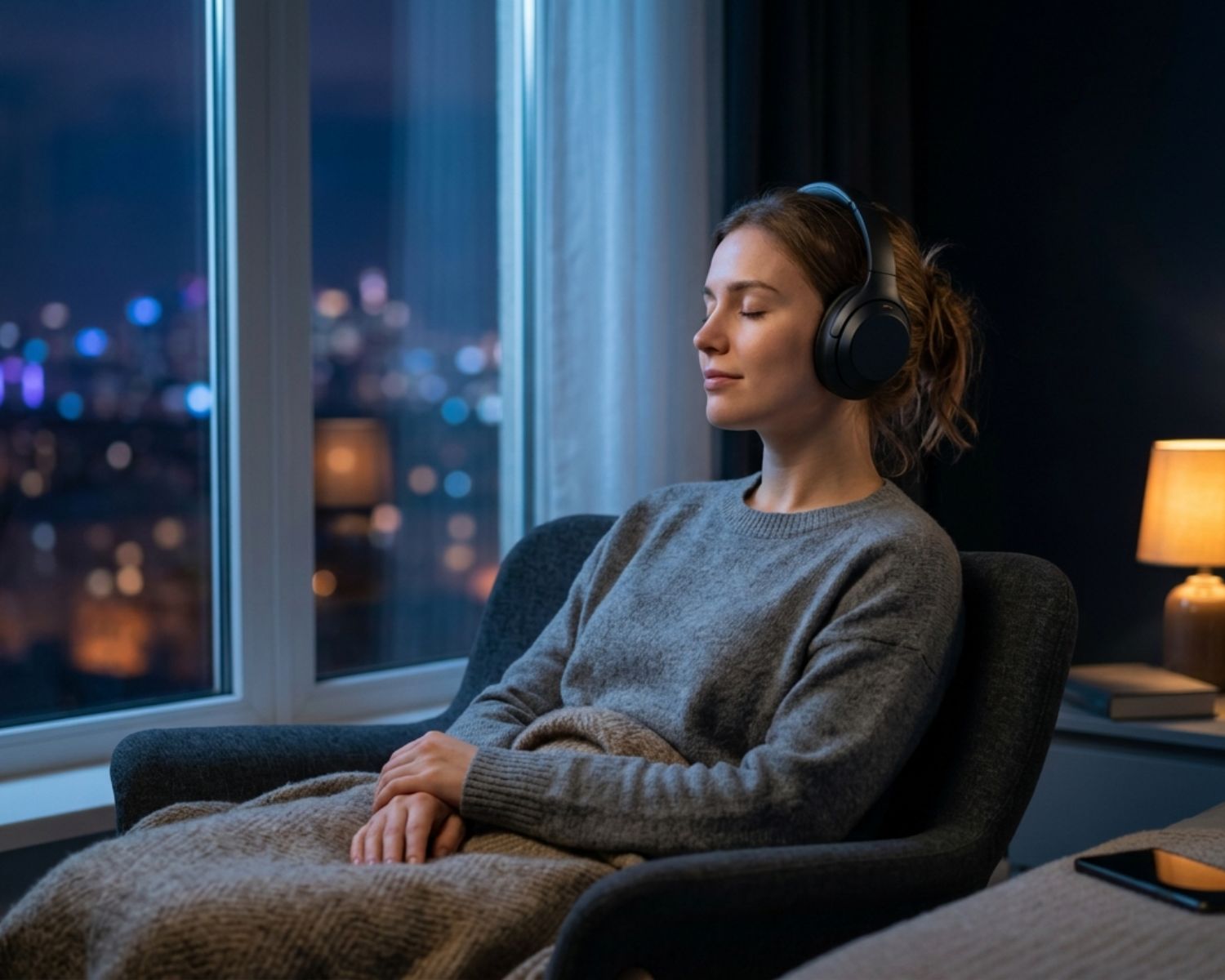
At night, there are usually fewer tasks competing for your focus. You may be lying in bed or sitting alone without interruptions. This gives your brain more space to follow individual instruments, notice changes in rhythm, and connect emotionally with the lyrics.
The difference is not necessarily in the headphones. It is in how carefully you are listening.
Your Mood Changes the Experience
Music is closely connected to emotion. At the end of the day, people often become more reflective, calm, or nostalgic. A song associated with a memory may feel more powerful when the surroundings are quiet and your mind is less occupied.
Dim lighting can also remove visual distractions, placing more attention on sound. Closing your eyes may strengthen this effect because your brain has less visual information to process.
That is why a track can feel ordinary during a busy afternoon but completely absorbing at midnight.
Headphone Design Still Matters
Some headphones are better suited to focused night-time listening. Over-ear models can create a wider, more immersive presentation, while closed-back headphones help reduce sounds from the room. Comfortable padding is also important if you plan to listen for an extended period.
A balanced sound profile may reveal fine details without making the bass or treble tiring. Wireless models are convenient in bed, although low battery warnings can quickly ruin a peaceful listening session.
You can explore different headphone options to find a design that suits your preferred listening environment.
Keep the Volume Comfortable
A quiet room may tempt you to turn the volume up because the experience feels more immersive. In reality, the reduced background noise means you should be able to hear clearly at a lower level.
The World Health Organization recommends keeping device volume below 60 percent of its maximum and taking breaks during longer sessions. If your ears ring or sounds feel muffled afterward, the volume was likely too high.
Make Night Listening a Ritual
Headphones do not technically sound better just because it is dark. You hear them differently because the environment is quieter, your attention is sharper, and your emotional state has changed.
Choose a favourite album, lower the lights, silence your notifications, and listen at a comfortable volume. You may discover that the best upgrade was not a new pair of headphones, but a better moment to enjoy them.
#Headphones #NightListening #AudioExperience #MusicLovers #SoundQuality #SafeListening #WirelessHeadphones #PersonalAudio #EarbudsForLife