


No products in the cart.
Your Ears Were Not Designed for This: What Wearing Earbuds All Day Actually Does
You put them in for the commute, leave them in for the work calls, keep them in through the gym, then finish the evening with a podcast. Somewhere in there your ears have been sealed shut for eight or nine hours, and nobody has ever explained what that does.
Plenty of advice exists about cleaning your earbuds. Almost none exists about the ear they live inside, which is a strange omission given that one is a piece of plastic and the other is a warm, narrow, self-cleaning canal that you have just blocked.
The good news is that none of this means you should stop using earbuds. It means a few small habits make a genuine difference.
The Seal That Makes Them Sound Good Also Traps Everything
A tight seal is what gives you bass, isolation, and a stable fit. It also raises the temperature and humidity inside your ear canal and keeps it there.
Warm and damp is exactly the environment bacteria and fungi prefer. Add sweat from a workout, or the moisture left after a shower, and you have created conditions that skin inside the ear does not normally have to cope with.
This is why heavy earbud users turn up with outer ear infections more often than people assume, and why swimmers and gym-goers are particularly prone.
None of this happens after one listening session. It builds across weeks of long wear without breaks.
Your Ears Clean Themselves, and Earbuds Interrupt It
Earwax is not dirt. It is a protective substance that traps debris and then migrates outward on its own, carrying everything with it. The system works well and requires no help from you.
Silicone tips interrupt that migration and can push wax back down the canal instead. Over time that leads to impaction, which people usually notice as muffled sound, a blocked feeling, or a sudden drop in volume on one side that gets blamed on the earbuds themselves.
If one side has gone quiet and cleaning the mesh has not fixed it, the problem may not be in the earbud at all. It is worth ruling that out before you start shopping for replacements.
Tips Carry More Than You Think
Anything sitting against skin for hours picks up oils, sweat, and bacteria, and earbud tips get put straight back into the case and then straight back into your ear.
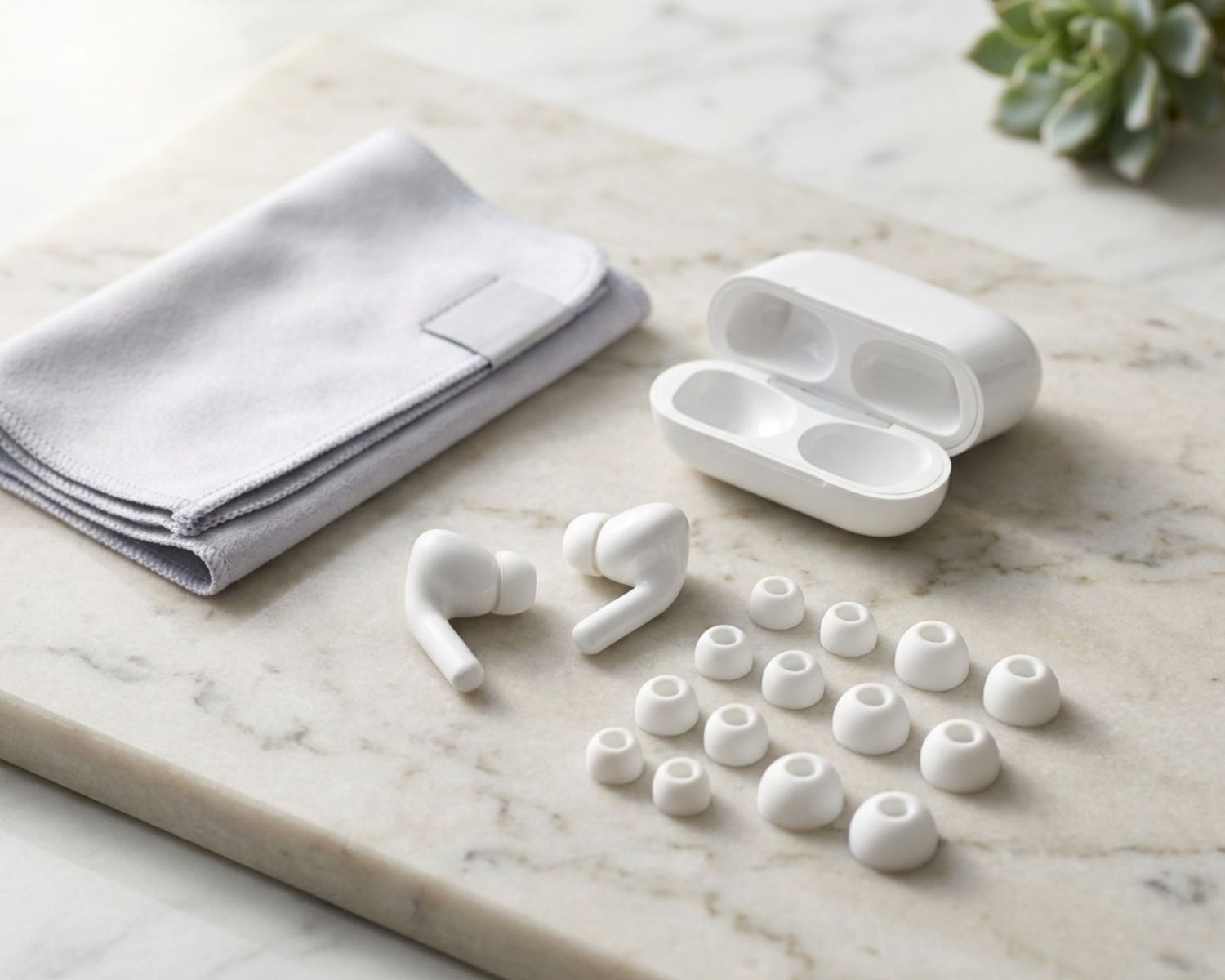
Cleaning them properly takes a couple of minutes. Remove the silicone tips and wash them in warm water with a little mild soap, then dry them completely before refitting, since trapped moisture defeats the purpose entirely. Wipe the earbud body with a barely damp cloth and clear the mesh gently with a soft dry brush.
Avoid alcohol on silicone tips, because it degrades them over time and leaves them stiff and prone to tearing. Once a week is reasonable for most people, and after every sweaty session if you train in them.
Sharing earbuds deserves a mention too, since passing a bud to a friend transfers bacteria directly into someone else’s ear canal. If you do it regularly, clean the tips between users or keep a spare set.
Pressure, Soreness, and the Fit Problem Nobody Diagnoses
Earbuds that ache after an hour are usually too large, not badly designed. The pressure sits against cartilage and skin with no relief, and people push them in harder to fix the sound, which makes it worse.
Most pairs ship with several tip sizes, and many people never try the others. It is also completely normal for your two ears to need different sizes, which is worth knowing before you conclude a pair simply does not fit you.
If irritation persists regardless of size, open-ear and bone conduction designs avoid the canal altogether, which is a genuinely useful option for people whose ears react badly to sealed tips. It is worth considering that when you next look at wireless earbuds rather than assuming discomfort is something to push through.
Give Your Ears a Break
The simplest habit is also the most effective, and it costs nothing. Take the earbuds out for a few minutes every hour or so and let the canal dry and cool. Avoid wearing them immediately after showering or swimming while your ears are still damp.
Do not sleep in sealed tips every night if you can avoid it, since that is eight uninterrupted hours in a sealed, warm environment.
Watch for signals that need attention rather than cleaning. Persistent itching, pain that lingers after you remove the buds, discharge, a blocked sensation that does not clear, or hearing that seems dulled on one side are all worth taking to a doctor or pharmacist.
Ear canals are delicate, and cotton buds push problems deeper rather than solving them.
Final Thoughts
Earbuds are not bad for your ears, but wearing them for nine hours without a break, without cleaning the tips, and with the wrong size fitted is asking a lot of a part of your body that evolved to be open to the air.
Clean the tips weekly, dry them properly, use the right size, take them out occasionally, and pay attention when your ears complain. Those few habits cost almost nothing and spare you the version of this story that ends with a doctor’s appointment.
#EarHealth #EarbudCare #HealthyListening #EarbudTips #WirelessEarbuds #EarbudsForLife