


No products in the cart.
That Deal Is Too Good: How to Spot Fake Earbuds Before You Buy
The listing looks legitimate. The photos match the real product, the brand name is spelled correctly, the reviews are glowing, and the price is roughly a third of what everyone else charges. You tell yourself it is a clearance deal, a grey import, or someone shifting stock quickly.
Counterfeit wireless earbuds are one of the most heavily faked consumer products in the world, and the fakes have become good enough that packaging alone will not tell you. Most people only find out weeks later, when the battery dies in an hour or one side stops working and the seller has vanished.
Knowing what to look for takes a few minutes and saves both your money and, occasionally, rather more than that.
Price Is the First Signal, Though Not the Way You Expect
Everyone knows a suspiciously cheap listing is risky. What catches people out is the moderately cheap listing, priced at perhaps sixty or seventy percent of retail, which feels like a plausible discount rather than an obvious scam.
Counterfeiters price deliberately in that range because it reads as a bargain rather than a red flag. Before buying, check what the product actually sells for across several established retailers, then treat anything well below that consistent range as something to verify rather than something to grab.
Genuine clearance exists, but it comes from sellers you can identify, with returns policies you can actually use.
Where You Are Buying Matters More Than What You Are Buying
Marketplace listings from unnamed third-party sellers, social media ads pointing to sites registered weeks ago, and pop-up stores with no trading history are where most counterfeits move.
Look for signs of a real business, meaning a contact address, a working phone number, clear returns and refund terms, and payment methods that give you recourse if the item never arrives or arrives fake. A site that only accepts bank transfer or cryptocurrency is telling you something important about how it expects the transaction to end.
Buying from a retailer that stocks a proper catalog across headphone products rather than a single deeply discounted model is the simplest protection available, because a real store’s incentive is repeat business rather than one clean getaway.
Physical Tells, Once It Arrives
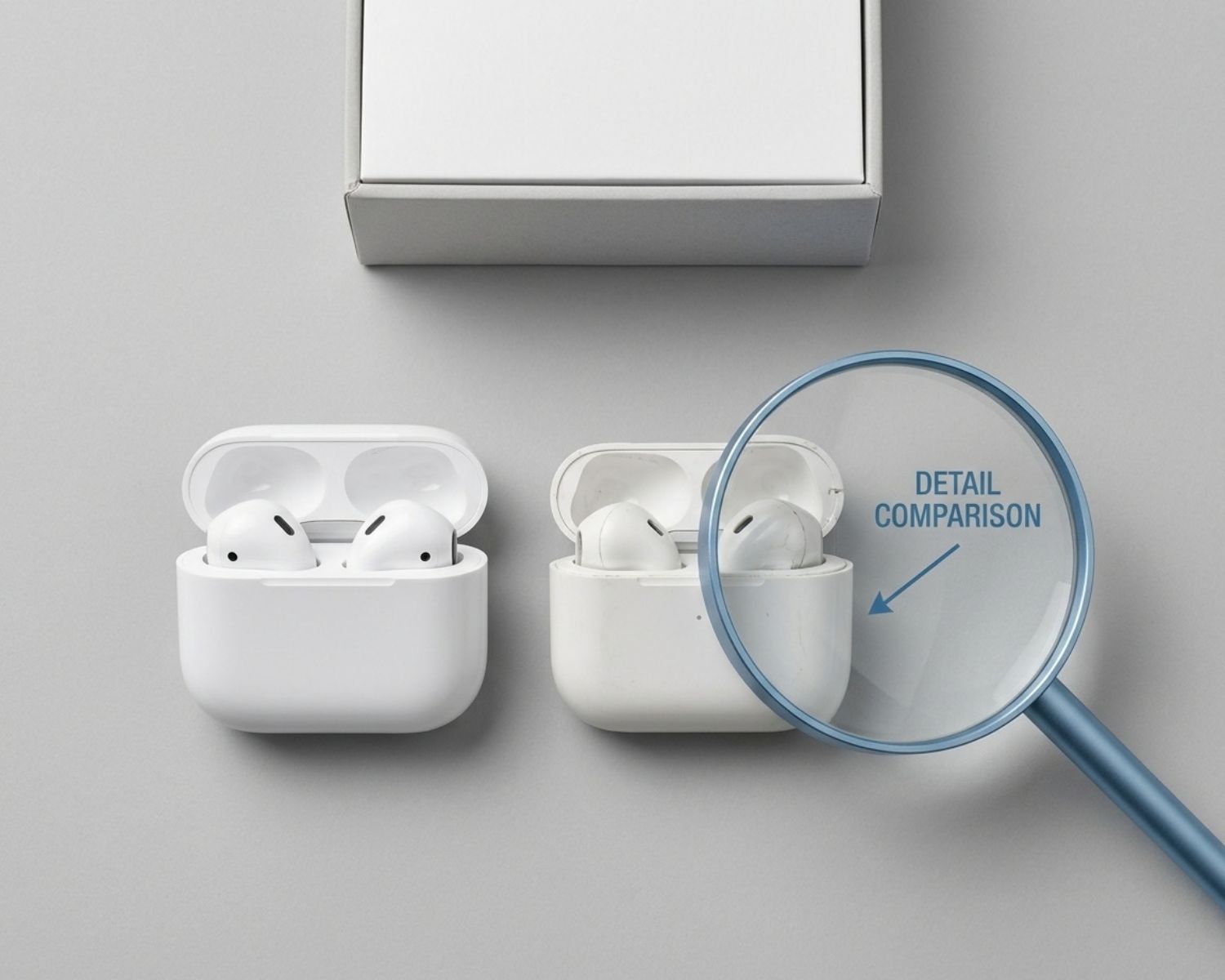
Counterfeits have improved enormously, though they still cut corners in predictable places.
Weight is a reliable giveaway, since fakes use cheaper components and smaller batteries, and the case usually feels noticeably lighter than the genuine article.
Check the hinge, which on real cases is firm and precise while fakes tend to be loose or gritty. Look closely at printed text on the buds and case for slightly wrong fonts, uneven spacing, or printing that sits fractionally off-centre.
Examine the charging contacts and seams. Genuine products have clean, even panel gaps and neatly finished contacts, whereas fakes often show visible glue, rough plastic edges, or misaligned halves.
Serial Numbers and First Pairing
Most reputable manufacturers let you check a serial number on their website or through support, and this is the single most conclusive test available to you. A number that returns nothing, or returns a different product, settles the question.
First pairing is revealing too. Genuine products from major brands trigger recognizable behavior, including branded pop-up animations on compatible phones, correct naming in your Bluetooth list, and proper recognition inside the manufacturer’s companion app.
Fakes frequently appear under a generic name, fail to connect to the official app, or connect and then report impossible battery readings.
Firmware updates are another test, since counterfeits cannot receive them and will either fail the process or refuse to acknowledge it.
The Part That Is Not Just About Money
Counterfeit earbuds use uncertified lithium cells and unregulated charging circuits, and that is a genuine safety matter rather than a quality complaint.
Real manufacturers run protection circuitry to manage charging, temperature, and cell failure, because lithium batteries behave badly when mishandled. Fakes skip it to save a few cents per unit. Swelling cases, unusual heat while charging, or a burning smell are all reasons to stop using a pair immediately and dispose of it properly.
There is no warranty, no recall, and no accountable manufacturer behind any of it, which means whatever goes wrong is entirely yours to deal with.
Final Thoughts
The fakes are convincing now, so the old advice about spotting bad packaging is no longer enough on its own.
Check the realistic market price before you buy, buy from a seller you could actually contact if something went wrong, verify the serial number, and watch how the pair behaves during first pairing and firmware updates. If something does arrive wrong, stop using it and pursue a refund rather than persevering with it.
A genuine budget pair from a real retailer will outlast, outperform, and outlive a counterfeit flagship every time, and it will not quietly become a fire risk on your bedside table.
#FakeEarbuds #CounterfeitTech #SmartShopping #EarbudBuyingGuide #ConsumerTips #EarbudsForLife