


No products in the cart.
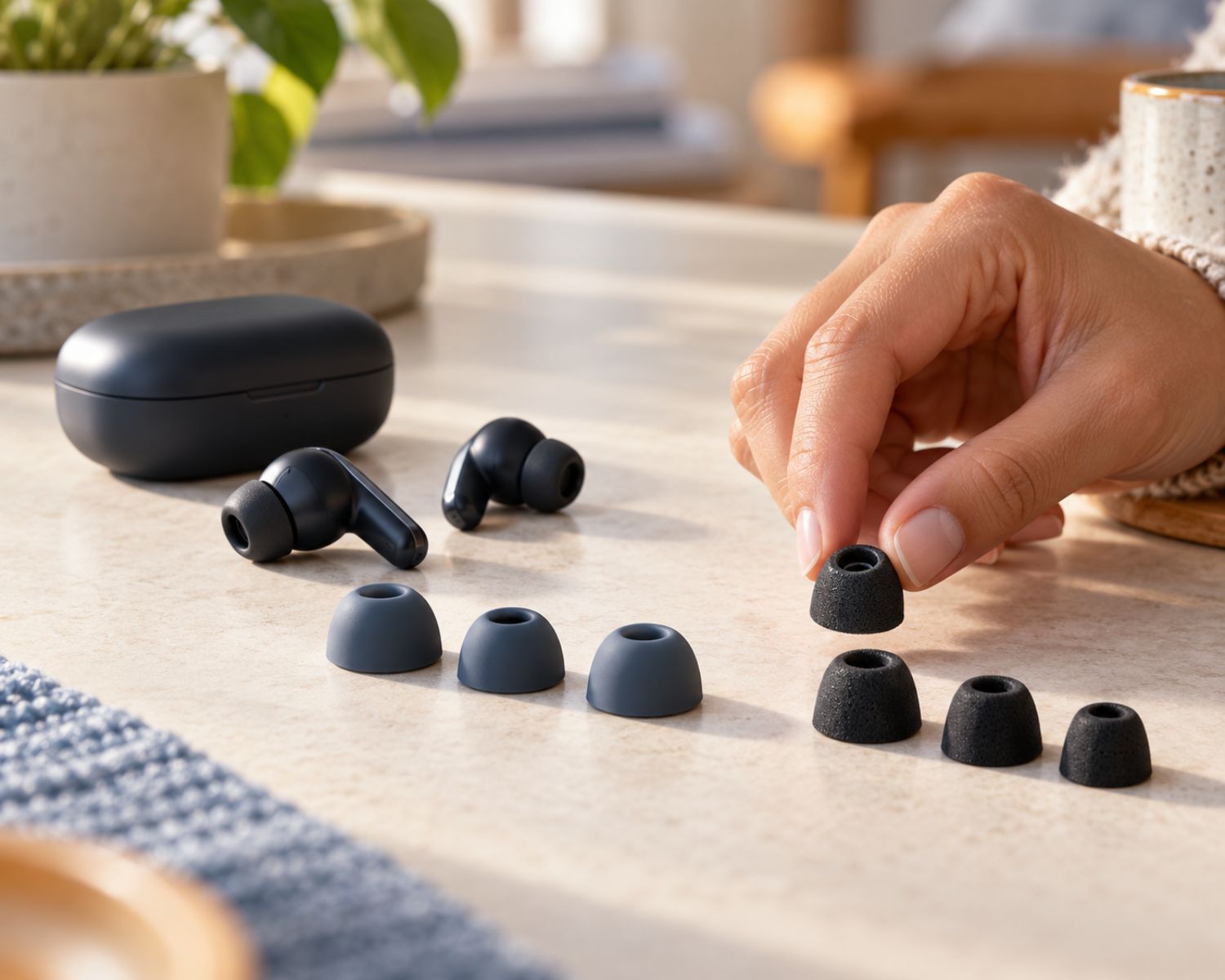
The $10 Earbud Upgrade That Can Fix Weak Bass, Bad ANC and Ear Pain
When earbuds start sounding thin, slipping out, or making your ears ache after twenty minutes, most people assume the buds themselves are finished.
They start comparing new models, reading reviews, and wondering whether they need to spend a small fortune to get their music back. Sometimes, the problem is far less dramatic. It is the ear tips.
Those tiny silicone or foam pieces decide how securely your earbuds sit, how much outside noise gets in, how strong the bass feels, and whether active noise cancellation has a chance of doing its job. If the fit is wrong, even excellent earbuds can sound strangely average.
Your Earbuds Need a Seal to Sound Right
Wireless earbuds do not create deep bass by sheer optimism. They need a reasonably secure seal between the ear tip and your ear canal.
When the seal is loose, low-frequency sound escapes before it reaches your ear. The result is familiar: vocals may still be clear, but music sounds flat, distant, or oddly weak. You may increase the volume to compensate, only to make the upper frequencies harsher without bringing back the bass you were missing.
A poor seal also affects active noise cancellation. ANC can reduce steady sounds such as engines, air conditioning, and train noise, but it works best alongside basic physical isolation. If air is leaking around the ear tip, outside sound has an open invitation into your listening session.
Before deciding that your earbuds have poor ANC, test a different tip size. The right fit can make a bigger difference than many people expect.
One Size Does Not Fit Every Ear
Most earbud boxes include small, medium, and large tips, yet many people try the medium pair once and never touch the others again. Medium is not a medical diagnosis. It is just the size manufacturers assume will fit the highest number of people.
Your left and right ears may not even need the same size. One ear canal can be slightly wider or shaped differently, which means a medium tip may feel perfect on one side and loose on the other. If one earbud keeps moving, loses bass, or causes more discomfort than the other, try mixing sizes.
A good fit should feel secure without needing to be pushed painfully deep into the ear. You should notice fuller sound and better isolation, but not a strong pressure sensation or soreness after a short listen.
If your earbuds include a fit test in their companion app, it can be useful. However, your own experience matters too. Walk around, speak, chew, and move your head. An ear tip that passes a five-second test but starts escaping during a commute is not the hero of this story.
Silicone or Foam: Which Should You Choose?
Silicone tips are the standard choice for a reason. They are easy to clean, durable, and usually provide a balanced combination of comfort and isolation. They are a good option for everyday listening, workouts, and users who prefer a lighter feel.
Foam tips expand gently after being inserted, which can create a closer seal for some ears. This often improves passive noise isolation and can make bass sound richer. The trade-off is that foam tips wear out faster, collect moisture more easily, and may not be ideal for people who dislike a more enclosed feeling.
There is no universal winner. If silicone feels loose or your earbuds seem incapable of producing bass, foam may be worth testing. If foam makes your ears feel too warm or pressured, a softer silicone tip in another size may be the better move.
When Your Ear Tips Need Replacing
Ear tips do not last forever. Silicone can become stretched, stiff, slippery, or torn. Foam can lose its ability to expand and seal properly. Sweat, skin oils, dust, and repeated cleaning also gradually change the surface.
It may be time to replace your tips if:
- Your earbuds suddenly slip more than they used to.
- Bass or ANC seems weaker despite unchanged settings.
- The tips feel sticky, cracked, flattened, or difficult to clean.
- Your ears become sore even though the earbuds once felt comfortable.
- One side now fits noticeably worse than the other.
Replacement tips are usually far less expensive than a new pair of earbuds, but check that they are compatible with your specific model. The opening needs to fit securely over the nozzle, and an oversized tip can interfere with the charging case.
A Better Fit Can Save You From an Unnecessary Upgrade
It is easy to blame the earbuds when the listening experience changes. In reality, the small part touching your ears may be doing most of the damage.
Before replacing a pair that still connects reliably and holds a reasonable charge, try a fresh set of correctly sized tips. You may restore better bass, stronger noise isolation, and comfort that lasts beyond the first song.
If you are comparing new options, explore the wireless earbud range at Earbuds4Life with fit and included tip sizes in mind, not just battery life and marketing promises.
Final Thoughts
The right ear tips are not a glamorous upgrade, but they are one of the most useful. They affect comfort, sound, stability, and noise cancellation every time you press play.
A $10 replacement can sometimes solve the problem that an expensive upgrade was supposed to fix. Your earbuds may not be underperforming. They may simply be wearing the wrong shoes.
#Earbuds #EarTips #NoiseCancellation #BetterSound #EarbudComfort #AudioTips #Earbuds4Life